Facebook, Whatsapp, Instagram, Messenger and Oculus – all Facebook-owned properties – all went offline Monday, and odd that the outage came the day/morning after the “60 Minutes” interview with former Facebook employee turned whistleblower Frances Haugen.
“The documents, first reported in a series of (Wall Street) Journal stories, revealed that the company’s executives understood the negative impacts of Instagram among younger users and that Facebook’s algorithm enabled the spread of misinformation, among other things,” CNBC reported.
In the 60 Minutes interview, Haugen said, among other things, that Facebook is “tearing our societies apart and is causing ethnic violence around the world.”Read More...
It may be summer, but we well know that tech – and rust – never rest. Last week, “Former President Donald Trump, who has been banned from most major social media platforms, announced a class-action lawsuit against tech giants Facebook, Twitter, and YouTube, along with their respective CEOs Mark Zuckerberg, Jack Dorsey, and Sundar Pichai,” Yahooreported. “…In court documents, Mr. Trump’s legal team argued that the tech firms amounted to state actors and thus the First Amendment applied to them. Legal experts said similar arguments had repeatedly failed in the courts before,” said the New York Times.
But Palace Intrigue noted a while back that in April, 2012, “Barack Obama himself admitted that the government helped Google and Facebook get off the ground. The government was present at the beginning when both companies were created.”
The lockdowns have certainly had a huge impact on the online world. First, Zoom mushroomed from out of nowhere, and when Zoom fatigue seemed to be setting in, there was Clubhouse, taking over the zeitgeist and becoming, as the Daily Caller noted (in Here’s What We Know About Clubhouse, The New App That’s Dominating Social Media), the fifth most popular social media app on the Apple store, trailing behind only Facebook, Messenger, Discord, and WhatsApp.
Not to be outdone, Facebook is launching several new audio-only features, including “Soundbites…and an audio-only version of Rooms (called Audio Rooms – think Clubhouse).” as The Sun reports.Read More...
This just in: Wall Street A-Listers Fled to Florida. Many Now Eye a Return, Bloomberg News reported. For the record, “USPS data shows few New Yorkers moved to Miami, Palm Beach; New Jersey, California and Connecticut were most popular moves.”
Looks like things are about to return to normal, right?
Why indeed and lest we forget, all of these companies already had a considerable footprint in NYC even prior to the pandemic. While many formerly NY-based companies, shops and restaurants pulled up stakes – or were driven out due to high rents and property damage – seems that the various members of the tech cabal didn’t bat an eyelash, and rather, waited for real estate prices to drop, even though it seems some will still pay top dollar.Read More...
Facebook is being sued for antitrust violations and AGs in most of the states have signed on. According to the Chicago Tribune, “Lawmakers of both major parties are also calling for stronger oversight of Facebook and other tech industry giants. They argue that the companies’ massive market power is out of control, crushing smaller competitors and endangering consumer privacy and choice. Facebook insists that its services provide useful benefits for users and that complaints about its power are misguided… The FTC and the Justice Department reportedly have been investigating Amazon and Apple, respectively…and Justice Department prosecutors are pursuing a separate antitrust case against Google, one that mirrors its case against Microsoft 20 years ago. Microsoft lost that one, although it escaped a breakup when an appellate court disagreed with the trial judge’s order.”
Om Malik published this piece (My advice to the attorney generals: It’s not about Zuck) and we agree. His point: the Microsoft case didn’t help much in reining in the company. “I would argue that they are doing what they have always done – using their market size as a moat and expanding into new markets. We don’t realize it just yet. Today, they control two major professional networks that will have as big, if not more, significant impact on society in the future — GitHub and LinkedIn…
“My view is that it is okay for these companies to continue and buy younger companies, but they should be restricted to only buying companies that enhance their core and not allowed to buy into new markets. For example, Facebook should not have been allowed to buy Instagram or WhatsApp… In a previous article for The New Yorker, I pointed out, “This loop of algorithms, infrastructure, and data is potent. Add what are called network effects to the mix, and you start to see virtual monopolies emerge almost overnight…”When it comes to Facebook, I wrote, “The more we use it, the more data we give the company, and the more it is able to control where we turn our attention.” Facebook, as a result, “thanks to this loop of algorithms, infrastructure, money, and data, is a winner-takes-all company.Read More...
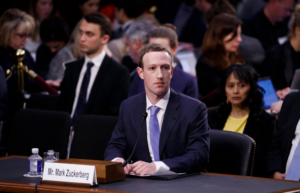
Mark Zuckerberg was back on Capitol Hill last week, testifying before Congress about the proposed cryptocurrency, Libra.
“I don’t control Libra” was the central theme of the Facebook CEO’s testimony,” according to TechCrunch. “The House of Representatives unleashed critiques of his approach to cryptocurrency, privacy, encryption and running a giant corporation during six hours of hearings. Zuckerberg tried to assuage their fears while stoking concerns that if Facebook doesn’t build Libra, the world will end up using China’s version.”Read More...
This week, in addition to the Federal probe, “States to Launch Google, Facebook Antitrust Probes,” The Wall Street Journalet al reported. As one commenter said, “The real problem with both is their pernicious theft of our personal data and sales of that data to all sorts of entities looking to prod us, outrage us, excite us, sell us, etc. This is what their businesses have become: resale of stolen data.”
AKA, Who Wants to be a Trillionaire? Ok, maybe not a trillionaire, but running a company with a shot at getting to the trillion dollar status, has been there, or is damn close or potentially able to get there? Notice that Apple, Google, Amazon and Facebook – four of the FAANG stocks – all have something in common: they all have 100M+ plus users, and are “trusted” platforms – “trusted” being an odd choice of words here, in our case, but work with us.
While Netflix is also part of the FAANG stocks and ergo potentially a trillion dollar player, the company is now experiencing something less than that Silicon Valley-venerated hockey stick growth, as Netflix reports slowing subscriber growth for the first time, which is also part of our point here.Read More...
Facebook announced the soon-to-debut of Libra, its new cryptocurrency, last week, saying that it hoped to bring billions of the unbanked into the digital economy, providing them with basic financial services through their cellphones, eerily echoing Facebook’s original mission to bring the world closer together with its social platform, in case you missed the irony.
Now that the LUPA/PAUL stocks have (mostly) gone public – Lyft, Uber, Pinterest and Airbnb), these supposed category killers aren’t exactly killing it in the stock market. It’ll be interesting to see how the massively funded We Company (nee WeWork) does and despite all of this, we’re still witnessing massive funding rounds. Vice, for one, despite its stalled growth, recently raised $250M, a pittance compared to the $575M raised by Deliveroo. At some point, growth does stall; hockey stick growth is unsustainable or as Douglas Rushkoff, author of Team Human et al, said at the Techonomy conference in New York last week, “exponential growth is a problem. The only thing that can grow exponentially forever is cancer, and then it kills its host.”
We’ve known Rushkoff personally since the early days of Web 1.0, which, he reminded us, was when we all innocently believed that the web would distract us from the insular world of television and bring us together, which Mark Zuckerberg told Congress was the intention of Facebook. Well, that and world domination, although he did not share the latter with Congress.
Back in those early days, Wired Magazine told us that the internet was going to be the salvation of the NASDAQ stock exchange. This was the attention economy, and, said Wired, thanks to digital, the economy would grow exponentially, unstopped, forever. And Alan Greenspan agreed: New paradigm! Unlimited growth! Forever! What they didn’t realize was that this economic system was a very old, obsolete operating system invented by the monarchs in the 12th and 13th century to prevent the rise of the middle class, Rushkoff noted.Read More...