Browsed by
Category: Tech Cartel

Unicorn, Shmoonicorn. Is It a Fantasy?

Unicorn, Shmoonicorn. Is It a Fantasy?

Image by Julieta Mascarella from Pixabay

If we noticed anything this week, it was that it may be time to rethink unicorns and hockey stick growth. We know what investors look for: TAM (Total Addressable Market) and it had better be big, as it’s all about ROI.

WeWork is planning their IPO, and after years of expansion and so-called hockey stick growth, the cracks are showing. Business Insider laid out The history of WeWork’s meteoric valuation rise — and fall, including “the coworking startup’s governance, real estate holdings, succession plan, employee retention, and questionable patent purchases have spooked potential investors. WeWork has amended its SEC filings twice already to address several of those concerns, but it might not be enough.

“According to a Reuters report, WeWork will target a $10 billion valuation for its IPO, drastically lower than the $47 billion valuation it last fetched in private markets. A $10 billion public valuation would be only slightly above the total amount of funding WeWork has taken in as a private company: about $8.39 billion since 2011, according to Pitchbook data.” Read More...

Antitrust: The Bill Gates Playbook

Antitrust: The Bill Gates Playbook

This week, in addition to the Federal probe, “States to Launch Google, Facebook Antitrust Probes,” The Wall Street Journal et al reported. As one commenter said, “The real problem with both is their pernicious theft of our personal data and sales of that data to all sorts of entities looking to prod us, outrage us, excite us, sell us, etc. This is what their businesses have become: resale of stolen data.”

Google (is also being) Targeted By 50 U.S. AGs In Potential Sweeping Antitrust Investigation Read More...

FakesBook (It’s Not At All What You Think)

FakesBook (It’s Not At All What You Think)

If you’re not yet aware of DeepFakes – hyper-realistic manipulations of digital imagery that can alter images so effectively that it’s largely impossible to tell real from fake – time to pay attention. The technology – and the problem – is escalating quickly.

According to Futurism, A Spy Used a Deepfake Photo to Infiltrate LinkedIn Networks. “Many of Jones’ connections told the AP that they were initially suspicious of the profile but accepted anyway.” We personally never accept a LinkedIn invitation from anyone whom we don’t know or haven’t met. The platform is about connecting with people to build your network of contacts for professional or business purposes. Why would you accept an arbitrary invitation? Yet people have argued with us that the more connections you have, the better. No better time than now to disagree. Read More...

The Secret Formula for a $1T Valuation

The Secret Formula for a $1T Valuation

AKA, Who Wants to be a Trillionaire? Ok, maybe not a trillionaire, but running a company with a shot at getting to the trillion dollar status, has been there, or is damn close or potentially able to get there? Notice that Apple, Google, Amazon and Facebook – four of the FAANG stocks – all have something in common: they all have 100M+ plus users, and are “trusted” platforms – “trusted” being an odd choice of words here, in our case, but work with us.

While Netflix is also part of the FAANG stocks and ergo potentially a trillion dollar player, the company is now experiencing something less than that Silicon Valley-venerated hockey stick growth, as Netflix reports slowing subscriber growth for the first time, which is also part of our point here. Read More...

Overdue: The Internet Declaration of Independence

Overdue: The Internet Declaration of Independence

Image by WikiImages from Pixabay

The U.S. just celebrated Independence Day, when we pause to take stock of what the founders fought for: liberty and justice for the citizenry, which were not necessarily granted to them in the countries from whence they’d come.

There are always fireworks.

Wikipedia co-founder Larry Sanger recently published his proposed Declaration of Digital Independence, and it’s a must-read. “Humanity has been contemptuously used by vast digital empires. Thus it is now necessary to replace these empires with decentralized networks of independent individuals, as in the first decades of the Internet,” he begins, and he does delineate the many abuses of the tech oligarchs, including: Read More...

Did Google’s Sunday Outage Just Prove the Anti-Trust Argument?

Did Google’s Sunday Outage Just Prove the Anti-Trust Argument?

Image by Gerd Altmann from Pixabay

We’ve said many times that no one stays on top forever. The Justice Department is preparing a new antitrust investigation against Google parent Alphabet Inc. – again. To refresh your memory and as the Wall Street Journal pointed out, “This comes six years after a similar probe from the Federal Trade Commission, which resulted in no significant damage to the company that powers more than 90% of the world’s internet search activity.”

Closer scrutiny is long overdue. What was not reported was the history of the past anti-trust investigation: it was 2013 – the days when Google executives were frequent guests at the White House during the past administration. In fact, according to the Wall Street Journal, Google visited the White House 230 times – more than all other tech companies combined. Both Google co-founder Larry Page and Google lobbyist Johanna Shelton met with FTC officials and top White House advisors. The investigation was then shut down when Google promised to voluntarily police itself. Interestingly, this is when Net Neutrality discussions also began and here’s an interesting statistic:

Alphabet/Google Market Caps prior to Net Neutrality: $399.05B for January, 2015. Market Caps as a result of Net Neutrality: $664.55B for Sept. 29, 2017 Read More...

Pay Attention to the Insights of Co-Founders

Pay Attention to the Insights of Co-Founders

If you’ve ever applied to an accelerator or approached (many) investors for funding, one of the most important points they check, especially in the case of investors, is team.

Above all, they want to know about the co-founders, and truth be told, most investors shy away from a startup with a solitary founder, the stated reason most often being that you should be able to find at least one person who shares your vision or passion and is willing to throw in with you. It’s also difficult to operate in a vacuum: much easier if you have that other person off whom to bounce ideas, and to keep you in check, if need be. Read More...

Don’t Look Now, But Tech Just Became Way More Dangerous (Actually, You Need to Look)

Don’t Look Now, But Tech Just Became Way More Dangerous (Actually, You Need to Look)

While we’re not big on conspiracy theories – we’re simply too busy to get sidetracked – we do love to follow trajectories to see where things may be going. Or to once again quote Wayne Gretzky, if you want to know where the puck is going, look to where it has been.

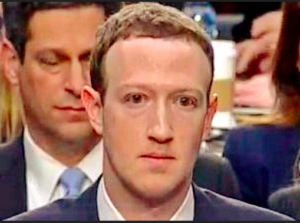
The news this week was the banning that has been happening with the social media platforms. War on Free Speech: Facebook Bans People It Considers “Dangerous”, and Twitter is at it, too. While the question seems to be coming up more and more – Is it time to break up Twitter, or regulate it as an edited platform (Big Tech Trying to Have it Both Ways as Platform and Publisher)?, and this would extend to all of the socials – let’s be honest, aren’t they publishers, after all? In fact, Facebook CEO Mark Zuckerberg himself is calling for regulation, and that should be concerning, especially given his focus, which is in lock step with that of the tech cartel, trust us. As Wired reported, Platforms Want Centralized Censorship. That Should Scare You.

So, why now?

Forest through the trees time, and Big Tech has gotten the four Ds down to an art, and yes, four – Deny, Deflect, Defend, Delay. Important, considering what else has been going on in tech to which not many people have been paying much attention: the rise of the Fakes, or as we prefer to call them, PHAkEs, which is our acronym for Post Human-Acknowledged Entities. Read More...

Is Tech Taking Us Backwards?

Is Tech Taking Us Backwards?

The focus du jour seems to be regulation of the internet, and the fact that now even Mark Zuckerberg wants new legislation to limit speech. How interesting that in twenty-odd years, we’ve gone from the internet being a vehicle where information wants to be free, to censorship.

If this is what you’re focused on, you’re missing something. Namely, the fact that the current push is not only for censorship of speech, but concurrently, for no speech at all. Read More...

Beware Big Companies ASKING to be Regulated

Beware Big Companies ASKING to be Regulated

In a seeming change of heart, Mark Zuckerberg backs stronger Internet privacy and election laws: ‘We need a more active role for governments’, he said, and no, there wasn’t a sudden rip in the universe. Zuckerberg penned an opinion piece in the Washington Post entitled The internet needs new rules. Let’s start in these four areas, which are harmful content, election integrity, privacy and data portability.

The editorial, no doubt, comes on the heels of the attention that Facebook, Twitter, Google and Amazon have been getting from Congress and various Presidential candidates, and as a result of the recent announcement that Facebook, Twitter and YouTube execs face jail and multi-billion pound fines over terror videos. “Australia could become the first country to introduce prison terms and fines if firms fail to speedily remove terror videos like the Christchurch massacre live-stream,” reports The Sun. Read More...