Browsed by
Tag: #SamAltman

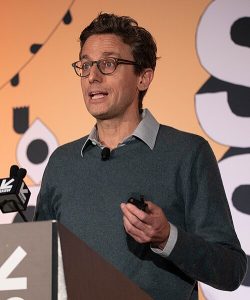
BuzzFeed and the AI Buzz Kill Coming Soon?
BuzzFeed and the AI Buzz Kill Coming Soon?

Here’s a cautionary tale for you.

Before Mark Zuckerberg became the darling of the age of social, there was young (inexperienced) BuzzFeed founder Jonah Peretti, the Sam Altman of his day. When BuzzFeed launched two decades ago, it was the darling of the digital publishing world, “building its audience through listicles before expanding into a newsroom to challenge stalwarts like the New York Times,” noted MSN. Peretti was the genius who, as MarketWatch put it, “had seemingly cracked the code for social-media virality, and would soon become one of the first digital-media startups to achieve unicorn status with a valuation of over $1 billion.”

“Fast forward to 2026 and, for many, the result couldn’t have turned out worse. Gawker was forced to shut down under the weight of lawsuits, Vice Media filed for bankruptcy and is a shadow of itself, and BuzzFeed now warns it could go out of business entirely this year.” Read More...

Dirty Little Secrets of 2025

Dirty Little Secrets of 2025

Photo by Kristina Flour on Unsplash

We’re back after taking a holiday hiatus, kicking it off with a recap of 2025. Not with another Top 10 whatever list, which are out there, ad nauseam, but rather with a recap of those pivotal moments or items of the year that faded from the headlines like, well, yesterday’s news. So what are some of these things you missed or otherwise overlooked?

First, eyeballs matter. In the Web 1 days, startups didn’t have supporting business models, so the ‘New Economy’s’ stock in trade/measure of success was the number of eyeballs you could muster.

Dirty Little Secret: eyeballs still matter, and now they’re everywhere. Just ask Astronomer CEO Andy Byron and CPO Kristin Cabot, “who viva la vida’d a little too hard at a Coldplay  and the internet noticed,” says Morning Brew, who singled out the episode as the ‘Viral Moment of the Year.’ Read More...

Does AI Have an Agenda?

Does AI Have an Agenda?

Image by Gerd Altmann from Pixabay

It certainly seems to, although it is a technology created by humans.* But given, say, Meta’s manipulation of people’s emotions that was revealed by Facebook whistleblower Frances Haugen (and which we reported on), the proverbial men behind the curtain do appear to have one, and the question is, given the past behavior of the tech bros, will AI be used for good instead of evil during this next iteration of tech?

Ah, it’s that old “Those Who Cannot Remember the Past Are Condemned To Repeat It” George Santayana thing again and if there’s one thing we cannot shrink from doing, it’s connecting dots.

First up, “A lawyer representing Anthropic admitted to using an erroneous citation created by the company’s Claude AI chatbot in its ongoing legal battle with music publishers, according to a filing made in a Northern California court,” TechCrunch reported. Read More...

Will the Real Slim Shady Please Stand Up

Will the Real Slim Shady Please Stand Up

Image by gt39 from Pixabay

Thank you, Eminem, and who’d have thought and how could you tell?

The multitude of falsehoods and over-promises of AI aside (Instagram’s AI Chatbots Lie About Being Licensed Therapists), Deep Fakes, that other wonderful outcome that AI hath wrought, is fast becoming a huge problem thanks to the improvements in AI. We’re currently witnessing The Rise of AI-Powered Deepfake Scams and as CNN  reported,Finance worker pays out $25 million after video call with deepfake ‘chief financial officer.’”

Of course, AI savior, Sam Altman, has a solution: capture the digital identity of, well, every human on the planet.  He first rolled out his orb (nee World Orb) iris scanner in 2023 to create a unique digital identity as proof of being human, which it seems “More than 12 million people have already verified their identity using Orbs, which are available and free to use in more than 20 countries,” said CNN. Not a huge number considering the billions of people on the planet, what to speak of the fact that there are those who are “worried the project could centralize too much power under Altman, who already has an outsized role in what’s expected to be a revolutionary tech transformation.” Read More...

AI and the Written Word

AI and the Written Word

Image by Gerd Altmann from Pixabay

A subject matter expert friend of ours is being pressed ad nauseam to write a book, but his free time is in short supply. It has been suggested to him, again ad nauseam, to  have an LLM do it for him. The book would be generated in days!

Before deferring to a generative AI, some things to keep in mind: “AI Search Has A Citation Problem. We Compared Eight AI Search Engines. They’re All Bad at Citing News,” Columbia Journalism News reported.  “We found that…

• Chatbots were generally bad at declining to answer questions they couldn’t answer accurately, offering incorrect or speculative answers instead.
• Premium chatbots provided more confidently incorrect answers than their free counterparts.
• Multiple chatbots seemed to bypass Robot Exclusion Protocol preferences.
• Generative search tools fabricated links and cited syndicated and copied versions of articles.
• Content licensing deals with news sources provided no guarantee of accurate citation in chatbot responses. Read More...

Silicon Valley Goes to Washington…Why?

Silicon Valley Goes to Washington…Why?

Photo by Andy Feliciotti on Unsplash

News stories have a way of quickly becoming yesterday’s news. Which for the most part they are, but what if there’s more to the story?

Ever wonder why the tech C suite has suddenly turned its attention to participating in the G qua Government suite (their  armies of lobbyists aside, of course) – and backed the current administration? We were curious, and there’s a reason why you need to look outside of the mainstream media for answers or connect dots that might be a bit obscured.

“The Shocking Reason Marc Andreessen Had to Endorse Donald Trump,” the Independent Sentinel reported – and not reported in the mainstream media. According to Andreessen, said the Sentinel, “The Biden Administration planned to control AI and only allow three companies to create it. The administration would crush all competing companies and classify the physics needed to run AI models. “AI is a technology, basically, that the government is gonna completely control. — Don’t fund AI startups,” Andreessen was warned. “That’s not something that we’re gonna allow to happen…We’re gonna control them, um, and we’re gonna dictate what they do.” Read More...

For Tech, the World Is Just Not Enough

For Tech, the World Is Just Not Enough

Image by stokpic from Pixabay

There’s no doubt that AI has changed the world, and we’re still basically at the beginning of this cycle in tech. New to the zeitgeist, at least. The idea of human-like thinking machines was first posited at the Dartmouth Conference in 1956. This year, ‘Godfather of AI’ Geoffrey Hinton won a Nobel even though he’s now scared of AI. Is anyone paying attention?

“Hinton shares his Nobel with John J. Hopfield of Princeton University. Hinton’s work built upon Hopfield’s breakthrough work where he created a network system that could save and recreate patterns. Combined, their work led to future breakthroughs in Machine Learning (systems that can learn and improve data without programming) and the concept of artificial neural networks, which is often at the core of modern AI,” said Tech Radar.

Hinton left “Google’s DeepMind where he and his team helped lay the groundwork for today’s chatbots like OpenAI’s ChatGPT and Google Gemini. However, when Hinton left in 2023, he sounded the alarm, worrying that Google was no longer, as he told The New York Times, “a proper steward” for AI.” Read More...

LLMs and the Way Back Machine*

LLMs and the Way Back Machine*

Image by Pete Linforth from Pixabay

First, a bit of history. At the dawn of the Web 1.0 era, everyone felt the need to have a presence on this new information superhighway.  Something. Anything. Businesses/corporations started putting up websites, which by today’s standards were placeholders, for which they paid millions to early web-focused ad agencies/web dev shops. But consultants to whom they paid thousands/hour advised them that this was what they needed to do, or their businesses/corporations would become irrelevant in this new tech age. For context, HTML coders were commanding salaries well into six figures. A lot of money was being thrown at a lot of youth and inexperience – web shops where the founders knew nothing about business, luckily, working with clients who knew nothing about the web. If the young founders walked into a client meeting with a palm pilot, they were clearly members of the digerati and you needed to go along with anything they said.

These young companies were renting way more office space than they needed, hiring way more employees than they needed, and were running out of money, so they’d throw a party, get some press, and get acquired by a large company/corporation. Who’d learn too late that they’d acquired little more than smoke and mirrors. But what they really bought was the hype.

Which is a large part of the reason why the Web 1.0 bubble burst. Read More...

The Importance of Transparency

The Importance of Transparency

Image by OpenClipart-Vectors from Pixabay

We’ve found that in tech, founders/the tech press, etc, in many cases, have a bad habit of stretching the truth, let’s call it, or at least of altering a narrative to suit their purposes. It’s top-down and the members of the tech cabal do it constantly – often with the willing assistance of the tech media, who let’s say tend to shy away from presenting the full picture.

Last week, “Microsoft and Apple (gave) up their OpenAI board seats,” MSN reported. “Microsoft reportedly told OpenAI that it’s confident in the direction the company is taking, so its seat on the board is no longer necessary.”

That’s the snapshot, which is often as far as many readers get, and let’s not forget that MSN, or Microsoft News, is a Microsoft property. Read More...

GenAIs and the Safety Dance

GenAIs and the Safety Dance

Photo by Evgeniya Litovchenko on Unsplash

The reference is a song by Men Without Hats and couldn’t resist given the soft shoe reaction given by the OpenAI co-founders following the resignation of its safety oversight team and talk about everyone taking a chance…

“In July last year, OpenAI announced the formation of a new research team that would prepare for the advent of supersmart artificial intelligence capable of outwitting and overpowering its creators. Ilya Sutskever, OpenAI’s chief scientist and one of the company’s cofounders, was named as the colead of this new team. OpenAI said the team would receive 20 percent of its computing power,” Wired reported.

All good – or at least a start, especially in light of all of the doomsday warnings reported on the potential dangers of unbridled, unchecked AI. A fifth of the company’s computing power as well as a crack team of researchers were being devoted to that danger. Sure, and how long did OpenAI’s not-for-profit status last? Read More...