At times like these, we have found that in order to see where the world might possibly be going, there is often no better teacher than history. Being in the midst of a “global pandemic,” good to look at what came before.
Often called the “greatest medical holocaust in history,” according to History, “The Spanish flu pandemic of 1918…infected an estimated 500 million people worldwide—about one-third of the planet’s population—and killed an estimated 20 million to 50 million victims, including some 675,000 Americans.”Read More...
Post 9/11, Americans feared for their collective safety. Two hijacked planes brought down the World Trade Center. Another hit the Pentagon. The fourth was diverted by a handful of passengers who downed it in a field in Pennsylvania rather than risking it hitting its intended target. The result: the Patriot Act (which was quietly renewed while we were being distracted by the ‘impeachment’), an acronym for “Providing Appropriate Tools Required to Intercept and Obstruct Terrorism.” Under the guise of making Americans ‘safer,’ it also infringed on the rights of citizens by giving law enforcement officials permission to collect intelligence on citizens, reducing public accountability; reducing the ability of the public to go to court to challenge a government search; allowing government officials to target citizens not under criminal investigation, and allowing unlawful imprisonment by denying due process.
Now there’s Covid-19 and even more of our freedoms have been eroded in just a few short months. Without a shot being fired, 40% of the world is basically under house arrest/lockdown under the guise of sheltering in place. Tomatoes, tomahtoes.Read More...
The 20-Teens Were the Decade of the Unicorn. Let’s Look at the Ugly.
The final few weeks of any year – what to speak of a decade – tend to give us pause to reflect on, in the words of Alexander Graham Bell, “What hath God wrought?”
We realize that, in terms of historic industries and major industrial transitions, tech is relatively new to the planet. Every major industrial shift prior to tech has done precisely what tech has done: basically, created efficiencies. But given the breadth, scope and speed at which tech has engulfed the global landscape, forgiving founders for their youthful business missteps has tended to create those efficiencies at great expense to some, and in many cases, quite a few members of the planet’s population.
Uber entered the ride-hailing space without consideration to local regulations (Ask forgiveness, not permission) and scaled quickly, following yet another tenet of technology: move fast and break things. Uber did make ride-hailing more convenient and, surge pricing aside, less expensive. However, their drivers were not all properly vetted, which led to, in several cases, criminal allegations. But Uber skated a fine line, insisting that it is an ‘app,’ and that their drivers were not employees – the same argument they made in order to avoid paying drivers employee benefits. Job creation? Uber did contribute to the swelling underclass: the money mostly went in one direction. The Next Web summed it up pretty well back in 2017: Uber: The good, the bad, and the really, really ugly. Given Uber’s (current) legal challenges around the world, it seems to be going to the lawyers.Read More...
The so-called sharing/gig economy is under fire – in California, anyway, with State Assembly Bill 5 (AB5). “Under the new “ABC” test (which is part of the new law), an individual is presumed to be an employee, unless the company can prove all of the following: A) that the worker is free from control and direction of the hiring entity in connection with the performance of the work, both under the contract for the performance of the work and in fact; B) that the worker performs work that is outside the usual course of the hiring entity’s business; and C) that the worker is customarily engaged in an independently established trade, occupation, or business of the same nature as the work performed,” The National Law Review explains.
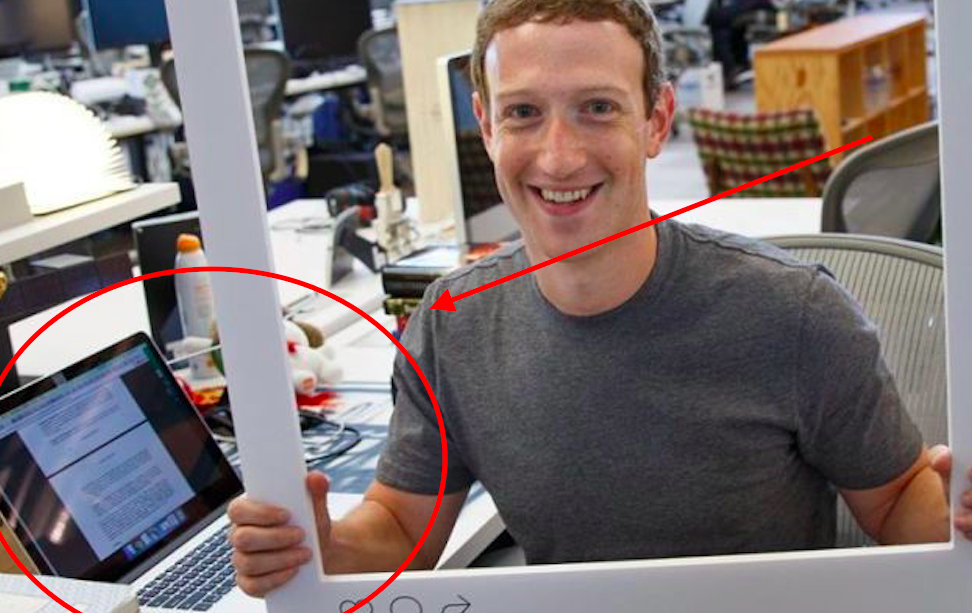
Facebook defines itself as a tech company. Google does as well. Jeff Bezos, who owns Amazon as well as the Washington Post, defines the latter as a tech company, too, which, technically, means that the once venerated news organization, by definition, should no longer be considered a news publication of record, and thanks for playing.
Can’t have it both ways,
but definitions seem to be somewhat fluid in the tech world. All depends on which way the winds are blowing.Read More...
The Theranos Effect: The Bewitched, Bothered and Bewildered Edition
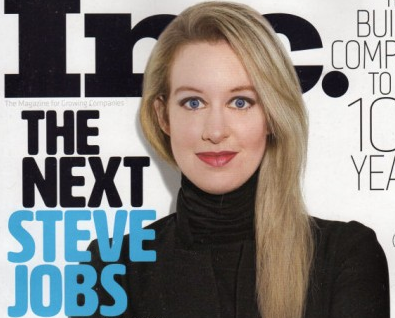
This past week, Theranos founder and Steve Jobs wannabe Elizabeth Holmes was charged with “massive fraud” by the Securities and Exchange Commission. She agreed to pay a $500,000 penalty, be barred from serving as an officer or director of a public company for 10 years, and returned 18.9 million shares she amassed during the alleged fraud.
The company, which raised more than $700M in funding, was “deceiving investors by making it appear as if Theranos had successfully developed a commercially-ready portable blood analyzer” that could perform a full range of laboratory tests from a small sample of blood…But in reality, we allege that after years of development, Theranos was able to process just a small number of blood tests upon its proprietary analyzer, and instead conducted the vast majority of its patients’ tests on modified commercial analyzers that were manufactured by others,” Steven Peikin, the SEC’s co-director of enforcement, told reporters, according to USA Today.Read More...