Browsed by
Category: Silicon Valley

Will the Real Silicon Valley Please Stand Up…

Will the Real Silicon Valley Please Stand Up…

And thank you, Slim Shady

There’s no doubt that the technology sector has become less tethered to the big cities and major tech hubs – Silicon Valley, New York City and Boston spring to mind – as a result of now long-standing Draconian lockdowns. The exodus from the Bay Area in particular has been well documented. According to The New York Times, They Can’t Leave the Bay Area Fast Enough. After all, The Times noted, “Rent was astronomical. Taxes were high. Your neighbors didn’t like you. If you lived in San Francisco, you might have commuted an hour south to your job at Apple or Google or Facebook. Or if your office was in the city, maybe it was in a neighborhood with too much street crime, open drug use and $5 coffees…But it was worth it. Living in the epicenter of a boom that was changing the world was what mattered. The city gave its workers a choice of interesting jobs and a chance at the brass ring.”

That was then. This is now and precisely to where has the sector gravitated?  “They fled to states without income taxes like Texas and Florida,” said The Times. Read More...

Technology’s Latest Overreach

Technology’s Latest Overreach

In late October, MailChimp updated their terms of service. Fair enough, and its Acceptable Use is pretty standard: “Please don’t use Mailchimp to distribute anything offensive, to promote anything illegal, or to harass anyone.” All well and good. They spell out a few other businesses that offer services, products, or content that may be considered questionable, and the list is there, although it’s pretty much the usual offending suspects. Again, fair enough and we certain fall far outside of any of those categories and practices, so all good.

But wait! There’s more! Read More...

Urban Distancing and the Rise of the Rest

Urban Distancing and the Rise of the Rest

For years, our urban areas have been attracting the young and the talented away from smaller towns, cities and suburbs, which had been leading to a seeming unabated expansion of our major urban centers into sprawling megalopolises. You could rattle off the destinations almost by rote: New York, San Francisco/Silicon Valley, Seattle, Los Angeles, plus a few more here and there. It didn’t matter that housing costs were absurd and, in many cases, up to half one’s salary would go into living quarters roughly the size of one’s college dorm. These were the epicenters, the hubs, at what may well prove to be, in retrospect, a moment in time.

We have yet to see the full after effects of the lockdowns, and while there have been reports of urban areas and states like New York and California hemorrhaging citizens, we’ve been hearing from our readers that many of them who moved out New York et al seemingly temporarily, sheltering with family or friends, gravitating back to the cities/towns/communities where they grew up, carrying on business over zoom et al, and watching the Draconian lockdowns and more lately, urban rioting, from afar, now have no intention of moving back. In fact, one investor friend who moved to a farm upstate at the onset, recently posted on the gram, showing off his new brood of calves. They were like having little kittens, he said. Read More...

The 20-Teens Were the Decade of the Unicorn. Let’s Look at the Ugly.

The 20-Teens Were the Decade of the Unicorn. Let’s Look at the Ugly.

Real unicorns were pretty ugly, too

The final few weeks of any year – what to speak of a decade – tend to give us pause to reflect on, in the words of Alexander Graham Bell, “What hath God wrought?”

We realize that, in terms of historic industries and major industrial transitions, tech is relatively new to the planet. Every major industrial shift prior to tech has done precisely what tech has done: basically, created efficiencies. But given the breadth, scope and speed at which tech has engulfed the global landscape, forgiving founders for their youthful business missteps has tended to create those efficiencies at great expense to some, and in many cases, quite a few members of the planet’s population.

Uber entered the ride-hailing space without consideration to local regulations (Ask forgiveness, not permission) and scaled quickly, following yet another tenet of technology: move fast and break things. Uber did make ride-hailing more convenient and, surge pricing aside, less expensive. However, their drivers were not all properly vetted, which led to, in several cases, criminal allegations. But Uber skated a fine line, insisting that it is an ‘app,’ and that their drivers were not employees – the same argument they made in order to avoid paying drivers employee benefits. Job creation? Uber did contribute to the swelling underclass: the money mostly went in one direction. The Next Web summed it up pretty well back in 2017: Uber: The good, the bad, and the really, really ugly. Given Uber’s (current) legal challenges around the world, it seems to be going to the lawyers. Read More...

Fake It Til You Make It 2.0

Fake It Til You Make It 2.0

More and more we’re seeing founders without so much as a plan to profitability raise outrageous amounts of venture capital based mostly on, from what we can tell, hubris, being mediagenic and what may arguably be either a Napoleonic complex, a touch of bipolar syndrome, or some combination of the two.

There seems to be a clear pathway to success in technology without having to be bothered with showing profits or even having a viable or clearly defined product, but given the downfall of Elizabeth Holmes (Theranos), Travis Kalanick (Uber), and most lately Adam Neumann (WeWork), that pathway hasn’t been clearly defined, or refined. But we have been paying attention, and we believe we have come up with 12 basic rules for success in technology – even with little or simple tech required: Read More...

Was Net Neutrality Truly Neutral? Here’s the Score Card

Was Net Neutrality Truly Neutral? Here’s the Score Card

The number of IPOS, pre and post Net Neutrality, from Statista

There’s currently a push on to reinstate Net Neutrality (U.S. Democrats unveil legislation to reinstate net neutrality rules). “The bill mirrors an effort last year to reverse the FCC’s December 2017 order that repealed rules approved in 2015 that barred providers from blocking or slowing internet content or offering paid “fast lanes,” says the Yahoo piece.

The stated promise of Net Neutrality was a “free and open internet” and maintaining “the last mile.” That’s their story, and they’re sticking to it.

In case you haven’t noticed, with the reversal of Net Neutrality in 2017, we haven’t witnessed “blocking or slowing down of internet traffic” by ISPs. Read More...

140 Characters Who Helped Shape the Tech World

140 Characters Who Helped Shape the Tech World

It was Peter Thiel who said, “We were promised flying cars. Instead we got 140 characters.” It looks like flying cars may be slowly rolling out, with Singapore’s flying taxi trial set to begin in the second half of 2019, but who the hell are those 140 characters to whom Theil might have been referring? As a co-founder of PayPal and an early investor in Facebook, LinkedIn, Yelp and Quora, he certainly knows what sorts of characters tech can breed.

We’ve been involved in the tech world since the nascent days of Web 1.0 in New York City – with monthly trips to Silicon Valley at the time, as well – and over the years, have encountered many of those characters, upfront and personal, for better or for worse. Of course we have stories to tell, but that’s for a later date and a much longer opus.

Some were true innovators who created platforms and software and devices that forged an entirely new industry. You may not be familiar with their names, but their contributions should never be forgotten. Some forgot their original drivers, whether it was to not be evil or to connect the world, tracked the world’s population in ways and to an extent to which it had never been tracked before, storing it and parsing out that information to the highest and/or any and all bidders, and paying no heed to the concept that we might have the right to be forgotten. Read More...

Don’t ask, don’t tell: Have Google and Facebook provided the tools for world censorship?

Don’t ask, don’t tell: Have Google and Facebook provided the tools for world censorship?

The expression may have been around forever, but the tech cartel certainly gives it a new spin.

We know that Google tracks your movements (without your permission), like it or not. Last week, ZDNet reported that an API bug in Google+ exposed 500,000 users. Google admitted that it had suffered a security breach and hadn’t bothered to tell anyone because it wasn’t legally required to. Now the company is shutting down one time potential ‘Facebook killer’ Google Plus, and the wags certainly had a field day with the virtually ignored platform, reporting that G+ users were inconsolable – both of them. Read More...

If the News is Too Good to be True, Chances Are…

If the News is Too Good to be True, Chances Are…

Credit: onsizzle.com


Jeff Bezos seems to have made certain people in Washington (DC) quite happy last week. Of course, our red flags always go up with any announcement.

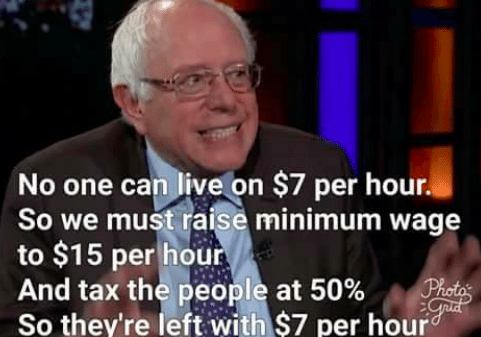
The big news was that Amazon has agreed to give all warehouse workers a $15 an hour minimum wage, thus satisfying Bernie Sanders, who had been after the company – and world’s richest man Jeff Bezos – for quite some time. As the AP reported, Amazon jumps out ahead of its rivals and raises wages to $15, and Sander (D, VT), hailed it as “a shot heard round the world.” Read More...

Life After Google Has a Solid Foundation

Life After Google Has a Solid Foundation

Google, et al, testified in Washington last week before the Senate Commerce Committee over issues ranging from election meddling to transparence. Apple, Amazon, Google and Twitter, alongside AT&T and Charter, were all there. In case you were distracted by yet another Senate hearing that was taking place, Ex-Google Employee Urges Lawmakers to Take On Company. Said The New York Times, “In a harshly worded letter sent this week, the former employee, Jack Poulson, criticized Google’s handling of a project to build a version of its search engine that would be acceptable to the government of China. He said the project was a “catastrophic failure of the internal privacy review process,” adding that ‘that there is a “broad pattern of unaccountable decision making.”

“We acknowledge that we have made mistakes in the past, from which we have learned, and improved our robust privacy program,” Keith Enright, Google’s chief privacy officer, said in his opening statement. Read More...