The Human Side of the AI Discussion
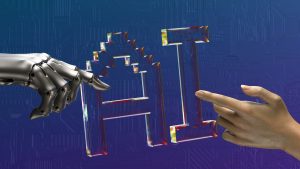
At this point, we all know that AI is not a panacea, and while it is a great tool, we wonder if it should or even could take over every job on the planet, as is so widely reported.
Are humans truly categorically replaceable?
We’re told, for example, that AIs are a better predictor of medical conditions than are doctors, but as Mercola reminds us in his piece on How Medical Superintelligence Is Revolutionizing the Future of Healthcare, “AI models tend to reflect the positions of dominant institutions like the U.S. Centers for Disease Control and Prevention (CDC) or World Health Organization (WHO). Be aware that they may emphasize conventional narratives regardless of evidence quality.” In the Covid era, Ivermectin was often demonized and referred to as a ‘horse de-wormer,’ which is how its started life. Now the medication is being effectively used to treat certain cancers and is part of the “WHO Model List of Essential Medicines.” Also keep in mind that while doctors are using AI to aid in their diagnoses, the results are only as good as the questions being asked and how they’re posed. Are physicians receiving training in effectively using LLMs?
“We are told to embrace large language models, but so much of the truth in our lives cannot be boiled down to language,” David Bruemmer, founder of W8less.io wrote in his LinkedIn post, The Warm Embrace of Chaos.
“There is nothing wrong with language models, but they are fundamentally knowledge-based systems,” he expounds in his deeper dive. “Real intelligence arises, not from language, but from real world, perception-based interactions. Although language can be a helpful way to approximate and simulate the processes of biological intelligence, they are actually the inverse of the process we see in biology. In biology, intelligence is bottom-up, but in AI intelligence is entirely top down.”
“Which kind of intelligence would you rather trust: humanoid robots that fall down the stairs one out of three times or the NBA player that just spun 270 degrees while dunking over two defenders?”
Which leads us to the importance of what one might call the human factor – including the fact that ‘to err is human’ – , chaos or even serendipity. For example, 20 Breakthroughs in Medicine That Happened by Accident, including aspirin; “Wilson Greatbatch’s wrong resistor choice while building a heart rhythm recorder (creating) the first implantable pacemaker. His fortunate mistake led to a device that has saved millions of lives, proving that sometimes, grabbing the wrong component can have life-changing results…The Spanish conquest of South America led to learning about cinchona bark’s anti-malarial properties from indigenous healers. This cultural exchange produced quinine, history’s first effective treatment for malaria.”
Other happy accidents: Insulin, Superglue and even a plastic eating enzyme. In fact, in 2020, the scientists who discovered the enzyme “turned it into a super enzyme that destroys plastic six times faster. With the world in a plastic pollution crisis, this accidental discovery couldn’t be more urgent for the future of the planet, as xprize.org reported.
Or there’s that much more pedestrian example: as the story goes, Isaac Newton sitting under a tree and being hit on the head by an apple, which led him to wonder why it fell straight down, which led to his theory of gravity.
More recently, Scientists Accidentally Discover Laser-Free LASIK Alternative. The breakthrough happened entirely by chance when (Michael Hill at Occidental College) and his collaborator, Dr. Brian Wong, a professor of otolaryngology-head and neck surgery at the University of California–Irvine, were frustrated with their attempts to reshape cartilage using lasers. Hill said that they decided to try heating the material using an electric current, but accidentally used a far smaller current than they intended. FDA approval still necessary but…see? Literally.
Human error. Sometimes known as serendipity.
On the other side of the coin, there’s this: Citizen Is Using AI to Generate Crime Alerts With No Human Review. It’s Making a Lot of Mistakes. “Three sources described how AI is writing alerts for Citizen and broadcasting them without prior human review. In one case AI mistranslated “motor vehicle accident” to “murder vehicle accident,” 404 Media reported. “The news comes as Citizen recently laid off more than a dozen unionized employees, with some sources believing the firings are related to Citizen’s increased use of AI and the shifting of some tasks to overseas workers” – whose first language is no doubt is not English and sometimes human error really is just that and are we giving AI too much responsibilities and leeway?
Getting back to chaos and perspective, “All language-based approaches to motion intelligence will fundamentally fail to deal with chaos and uncertainty while perception-based approaches can eagerly embrace the unknown,” Bruemmer warned. “Put another way, the unknown is not an edge case you can dismiss. The unknown will eat your model alive. Large language models are looking to play an elaborate game of chess with a known set of discrete states. GPUs can handle many states, but the real world has a lot of butterfly wings. For better or for worse, our universe is more like a game of dodgeball than a chess board. In this game of dodgeball, everything is decided by tiny fluctuations in chaotic motion and linked to literally everything in the universe, including sunspots, the gravitational pull of the moon and the flap of a shirttail that was not in your mode. Chaos is the divine spark for real world life.”
Or as we would say, pay attention to the details. And watch your language. Onward and forward.